The Crisis of Attention
We may be listening to someone and find that our mind has already begun preparing its reply. We may sit down to read and reach for a distraction before finishing the page. Such moments are ordinary, but they raise a question: what do we miss when we can no longer give our attention?
Modern life offers a constant flow of information, contact and activity. Even when the external noise fades, memories, plans and anxieties continue to occupy us. It can be difficult to remain with what is before us long enough to see it clearly.
This movement shapes the way we see the world. We notice what confirms our expectations or answers an immediate need. Another person can become a role or a problem to solve; nature becomes scenery. The spiritual search, too, can become another activity to pursue and measure.
A longing for meaning may remain beneath this restlessness. We look for answers, methods and new experiences, yet may overlook the simple act from which a search can begin: giving our full attention.
To listen without preparing our reply. To look without immediately judging. To let another person speak before deciding what their words mean. These small acts are difficult because they ask us to set aside, for a moment, the familiar movement of our own thoughts.
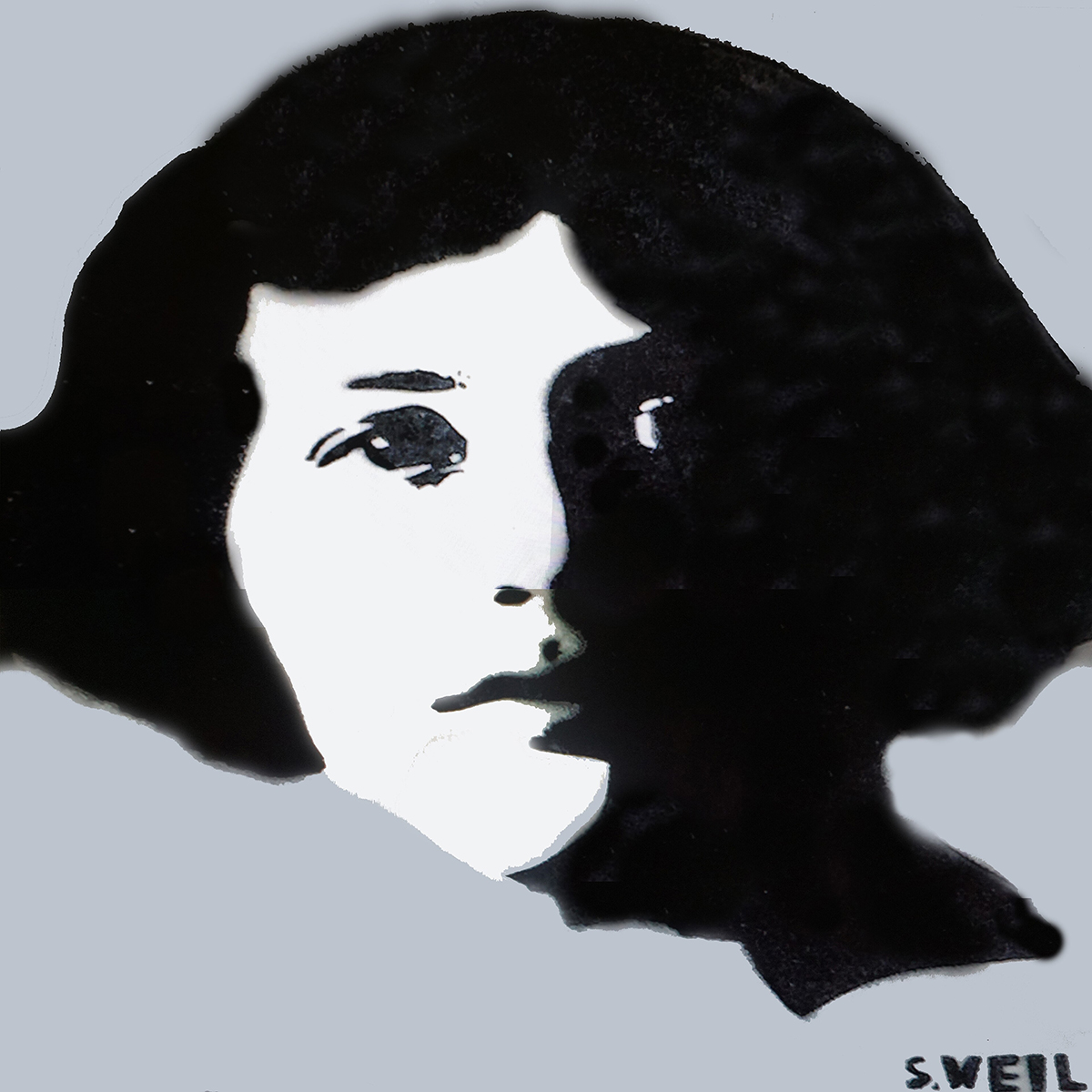
Simone Weil understood attention as an inner attitude of openness. It was more than concentration or intellectual effort. She asked what becomes possible when we grow quiet enough to receive something beyond our own expectations.
Simone Weil and the Discipline of Attention
Weil believed that desires, fears and memories shape our ordinary way of looking at the world. We rarely encounter a person or an event without interpreting it through ourselves. Attention begins when that activity grows quieter, even for a moment.
She describes attention as a form of waiting: a living attentiveness that does not rush to a conclusion or force an outcome. We can examine a question carefully while admitting that the answer may not yet be ours to give.
Weil saw this discipline at work even in ordinary study. A student struggling with a problem may learn to resist the first convenient answer and remain honest about what is difficult. Success in the exercise is not the only measure of its value. The quality of attention brought to it may matter more. This helps explain why waiting is active: it asks for effort, while leaving the mind open to a truth it cannot produce on demand.
This runs against habits formed by speed and certainty. Weil asks us to make room for what we do not yet know. That requires humility and a willingness to be surprised.
Attention also changes the way we meet other people. In a letter to Joë Bousquet, Weil called attention “the rarest and purest form of generosity.”
Before trying to help another person, we may need to see them as they are, beyond the role we have assigned them or the answer we are ready to offer.
Her concern for attention went beyond private contemplation. She asked what it means to recognise someone who is afflicted, whose suffering may be overlooked or made into an abstract cause. The first response may be to stop and attend to the person before us. This is not a substitute for help or action. It changes the ground from which help is offered: the other person has a life beyond our account of them, and deserves to be seen in that fullness.
Attention as Prayer
“Attention, taken to its highest degree, is the same thing as prayer.”
The sentence is surprising. Prayer is often associated with words, worship or petition. Weil brings it close to the act of being inwardly available to what is greater than ourselves.
For her, prayer begins when something in us becomes quiet enough to listen. Attention involves the whole person: our thoughts, our desire to act, and our readiness to let reality speak before we impose a meaning on it.
Waiting in this sense is alert. It is like standing before a closed door without trying to force it open. We continue to attend, even when nothing seems to happen. The answer, if it comes, cannot be produced by our impatience.
Weil offers no promise of a special experience. Her account of attention is demanding because it asks us to notice how often we fill silence with our own concerns.
If attention can become prayer, it may enter ordinary life. We can practise it in a conversation, in the presence of beauty, or beside someone who is suffering.
Such attention does not remove pain or solve every problem. It allows us to meet what is there more honestly.
This does not mean every quiet moment is prayer, or that careful listening removes the demands of ordinary life. Weil asks for a more exacting readiness to receive what we might otherwise overlook. Sometimes that will be uncomfortable. Paying attention can disclose a need we cannot easily meet, an error in our own thinking, or an injustice we would prefer to keep at a distance.
The Ego in Spiritual Clothing
If attention opens us to reality, why is it so difficult to sustain?
Weil locates a powerful obstacle in the self. We carry our needs, fears and ambitions into each encounter, often without noticing how they shape what we see.
The longing for truth can be genuine, yet even a sincere search may strengthen our self-image. We might measure our spiritual progress, compare our understanding with that of others, or grow attached to being known as a seeker. The search then begins to turn around the person who is searching.
Attention gently loosens this grip. It asks us to step back from the need to interpret, possess and control everything we encounter. In that movement of self-forgetfulness, another possibility begins to emerge.
Weil called a deeper form of this movement “decreation.” The word carries a theological weight that cannot be reduced to a way of feeling better about ourselves. It concerns the surrender of our claim to stand at the centre, so that God and the reality of others can be received without being made extensions of the self.
This cannot be achieved by willpower alone. An effort to empty ourselves can become another achievement for the ego. Weil returns to patient attention, through which we may become aware of our self-centredness without turning that discovery into a new identity.
The change may be quiet. We may become less occupied with proving ourselves and more able to recognise what another person needs. That is a modest beginning, but it is real.
Exile, Distance, and the Contemporary Seeker
At times, beliefs that once seemed sufficient no longer answer our questions, while nothing has appeared to take their place. The seeker may feel caught between worlds.
Weil knew something of this position. Drawn deeply to Christianity, she remained outside the Catholic Church. In letters to Father Joseph-Marie Perrin, she gave several reasons for hesitating over baptism, including her sense of solidarity with people beyond the Church. She also wondered whether she was called to remain at its threshold. It would be too simple to reduce her decision to a dislike of certainty.
Her position may speak to people who are searching without feeling able to settle within a tradition. Such searching can become restless when it is driven only by the desire for answers. It can also deepen humility and attention.
There is a difference between remaining open and refusing every commitment. Weil’s own position was bound to her particular religious experience and intellectual vocation; it is not a pattern that every seeker must follow. What her writing offers is permission to take a question seriously while it remains unresolved.
A person can continue to listen, read and act honestly without claiming a certainty they do not possess.
Exile is not always the absence of truth. Sometimes distance makes us aware of how quickly we claim to possess it. Longing can keep a question open and prevent us from settling for an answer that has not yet become real in our lives.
For Weil, waiting did not mean abandoning the search. It meant remaining faithful to it without forcing its conclusion. What feels like a threshold may become a place of preparation.
Learning to See Again
Attention, prayer, the surrender of the ego and the experience of distance are connected in Weil’s thought. Each asks us to see more clearly what is before us, and to notice what we bring to it.
Weil offers no simple technique for this work. We can begin by listening more fully, remaining with a difficult question, or recognising the moment when our need to be right has taken over. These acts do not make us spiritually accomplished. They may make us more available to truth.
Attention brings us back to the world. It can make us more honest about ourselves and more responsive to other people. In a distracted life, that is already a substantial change.
Perhaps a spiritual journey begins here: with a willingness to remain present, and to let what we encounter ask something of us. Weil reminds us how much can depend on the simple, difficult act of learning to see again.
Sources
Simone Weil, Gravity and Grace, “Attention and Will”.
Simone Weil, “Reflections on the Right Use of School Studies with a View to the Love of God”.
Simone Weil, letter to Joë Bousquet, 13 April 1942.
Simone Weil, letters to Father Joseph-Marie Perrin in Waiting for God.
© Michael Vinegrad. MPhil, MA. 2026. All rights reserved. Please do not reproduce this article without permission.